

Winter Tire Season in Canada: Tires, Tread, AWD & Brake Safety
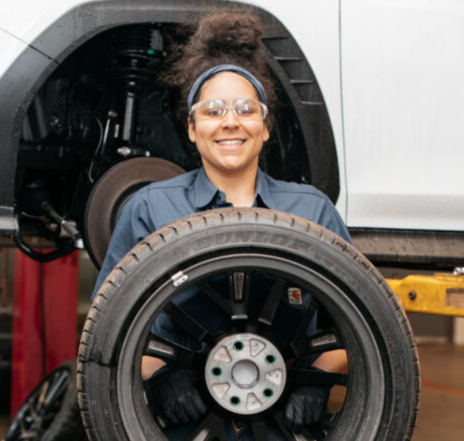
Driving in Canada means experiencing everything from blistering summer heat to sudden black ice, slush, and heavy snowstorms. Your tires are the only four contact points keeping your vehicle attached to the road, while your All-Wheel Drive (AWD) and Anti-Lock Braking Systems (ABS) work together behind the scenes to deliver traction, stability, and stopping power.

Whether you’re commuting through daily city traffic or heading out on a winter highway, taking care of your rubber, brakes, and drivetrain is essential for safety, fuel economy, and avoiding expensive repairs down the line.
At Diamond Diagnostics, we believe in honest, pressure-free advice to keep your vehicle running safely and reliably year-round. Here is everything you need to know about seasonal tires, tire changeover costs, tire wear checks, and the critical AWD and ABS maintenance most drivers overlook.
Winter vs. All-Season vs. Summer Tires: What’s the Difference?
Understanding tire types isn't just about tread pattern. It’s primarily about temperature and rubber chemistry.
Summer Tires
Best used in: Warm weather above 7°C.
How they work: Summer tires use specialized, firmer rubber compounds designed to maintain stability, resist excessive wear in high heat, and provide maximum dry and wet grip above 7°C.
The risk: When the temperature drops below 7°C, summer tire rubber hardens significantly, losing traction on cold pavement.
All-Season Tires
Best used in: Spring, summer, and mild fall temperatures above 7°C.
How they work: All-seasons are versatile for moderate climates, handling rain and light road conditions well.
The myth: Despite the name "All-Season," they are not designed for Canadian winter conditions. In freezing temperatures, the rubber compound stiffens, significantly increasing your stopping distance on snow and ice.
Winter Tires
Best used in: Cold winter weather below 7°C, ice, slush, and heavy snow.
How they work: Made with specialized, flexible rubber compounds that stay soft and pliable in freezing weather, paired with deep tread channels and tiny slits called sipes that bite into snow and channel away slush.
Why they matter: Dedicated winter tires can cut your emergency stopping distance on snow and ice by up to 30% to 50% compared to all-season tires.
When Should You Swap Your Seasonal Tires?
Timing your seasonal tire changeover isn't about the calendar. It’s about the thermometer.
Spring Swap (Winter to Summer/All-Season): Make the change when temperatures consistently stay above 7°C. Running winter tires in warm weather causes the soft rubber to degrade and wear down prematurely.
Fall Swap (Summer/All-Season to Winter): Make the change when daytime temperatures consistently hover at or below 7°C. Do not wait for the first snowfall. By then, shops are fully booked, and driving on hardened summer/all-season tires is unsafe.
Tire Mounting Costs: On-Rim vs. Off-Rim Swaps
When budgeting for your bi-annual tire swap, how your tires are stored makes a major impact on both time and installation costs.
Off-Rim Tire Change (Mount & Balance)
If you only have one set of wheels (rims) and switch the rubber on and off those rims twice a year:
The Process: Technicians must dismount the old tire from the wheel, mount the new tire, replace or service the valve stems, balance each wheel on a machine, and re-install them on your vehicle.
Cost Factor: Higher labor costs due to the time and equipment required. It also subjects your tires and rims to extra wear over time during repeated mounting and demounting.
On-Rim Tire Change (Direct Wheel Swap)
If your winter tires are permanently mounted on their own dedicated set of steel or alloy wheels:
The Process: The service is a straightforward wheel swap, removing one set of mounted wheels, thoroughly cleaning the wheel hub mating surface to remove rust and debris for proper torque seating and vibration prevention, bolting on the other set, and performing a quick torque check and pressure adjustment.
Cost Factor: Significantly lower labor costs and much faster service times. Having a dedicated set of winter rims usually pays for itself within two to three seasons in saved labor fees.
How to Tell if Your Tires Need Replacement
Driving on worn tires dramatically increases your risk of hydroplaning, extended stopping distances, and blowouts. Here is how to check if your tires are still road-worthy:
The Tread Depth Inspection
Official Canadian provincial and commercial safety inspections measure tread depth in millimeters.
New tires typically start around 8 mm to 10 mm.
Legal Minimum: Provincial safety limits mandate a minimum tread depth of 1.5mm. Driving at or below this limit is unsafe and illegal.
Quick Check: Place a Canadian Toonie in the tread groove. If the tread covers the silver outer ring and reaches the bear's paws, your tread is in good shape. If you can see the top of the outer ring, your tread is dangerously low.
Tread Wear Indicator Bars
Modern tires have flat rubber bars molded into the tread grooves. When your tread wears down flush with these indicator bars, the tire has reached the end of its lifespan.
Age of the Tire
Rubber degrades over time regardless of tread depth. Check the 4-digit DOT date code on the tire sidewall. For example, "1221" means manufactured in the 12th week of 2021. Tires older than 6 to 10 years should be inspected closely for dry rot, cracking, or structural breakdown.
Physical Damage
Inspect sidewalls regularly for bulges, cracks, bubbles, or uneven tread wear, which often points to alignment issues or worn suspension components.
Active Winter Safety: Maintaining Your AWD and Anti-Lock Brake System (ABS)
A great set of winter tires provides grip, but your All-Wheel Drive (AWD) and Anti-Lock Braking System (ABS) are the active electronic and mechanical guardian angels that keep your vehicle stable when road conditions turn hazardous.
How AWD & ABS Work Together for Winter Safety
While AWD ensures power is distributed effectively to get you moving without spinning out, ABS ensures you maintain full steering control when you need to slow down or stop suddenly on snow and ice.
Preventing Wheel Lockup: When you brake hard on slippery roads, a wheel can easily lock up and slide, making steering impossible. The ABS unit monitors wheel speeds electronically and pumps the brakes automatically up to 15–20 times per second to prevent lockup, allowing you to steer around obstacles safely.
Integrated Traction Control: Modern vehicles link ABS wheel speed sensors directly to the AWD controller and Traction Control System (TCS). If one wheel starts slipping on ice during acceleration, the computer uses the ABS module to lightly brake the spinning wheel, forcing the AWD transfer case and differentials to send power to the wheels with actual grip.
Essential AWD & Brake Fluid Maintenance Points
To keep these systems communicating and operating instantly in sub-zero conditions, routine fluid maintenance is critical:
Front & Rear Differential Fluids: These gearboxes split engine torque between your wheels. Over time, differential fluid accumulates moisture, metallic particles, and heat breakdown, causing gear wear and binding on tight turns.
Transfer Case (PTU) Fluid: The transfer case transfers drive power between the front and rear axles. Clean fluid prevents internal clutch slippage and protects high-stress gears.
Brake Fluid Flush (Crucial for ABS): Hydraulic brake fluid is hygroscopic, meaning it absorbs moisture directly from the air over time. In cold Canadian winters, moisture trapped inside brake lines can freeze, rot internal ABS hydraulic pump valves, or lead to a soft brake pedal and reduced stopping power. Flushing fresh brake fluid protects your expensive ABS module and ensures instant pressure delivery when you slam on the brakes.
Wheel Speed Sensors & Harness Inspection: Corrosive road salt and road slush can corrode wheel speed sensor wiring and target rings. A fault in even one sensor will disable both your ABS and AWD systems simultaneously, putting your safety back on manual mode.
Recommended Service Intervals
Differential and Transfer Case Fluids: Service every 60,000 km to 100,000 km, or every 30,000 km to 50,000 km if you do a lot of towing and hauling.
Brake Fluid: Flush every 2 years or 40,000 km to 70,000 km.
Complete Vehicle Care with Diamond Diagnostics
Your tires, drivetrain, and braking systems form an interconnected safety network. Paired with routine inspection, timely seasonal tire changes, clean gear fluids, and fresh brake fluid, your vehicle will handle whatever Canadian winter throws your way.
Have questions about your tire wear, need a seasonal tire swap, or want your AWD and ABS systems inspected? Reach out to the team at Diamond Diagnostics today for honest, expert advice and reliable automotive service.

Comments